
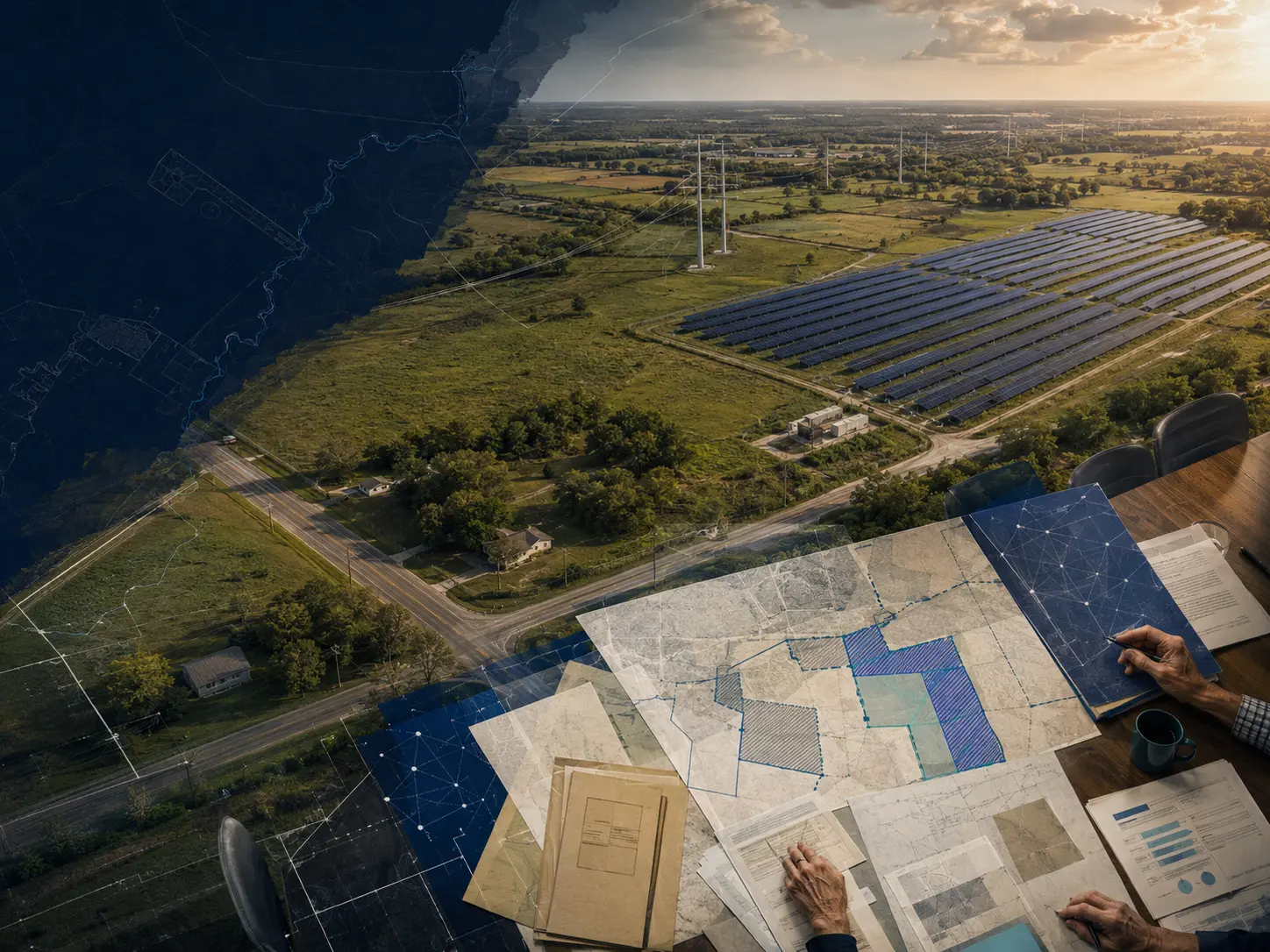
Editorial collage of St. Helena Parish solar development, civic governance, roads, and maps

A continuing field case in local leverage and community authority

An opportunity built through trust, cumulative knowledge, and local invitation.

The solar, Community Benefits Agreement, PILOT, and Industrial Development Board work did not arrive as a host assignment. It emerged from learning the Parish, following a Pointe Coupee lead, translating unfamiliar tools, and helping local leaders assemble a structure they could use to shape major investment.

SHEDSolarCBAIDBFirst PILOTTri-Parish STEAM
6Substantive project records
1stParish PILOT pathway
$10KFirst Tri-Parish award

The parish story

What changed—and how.

St. Helena’s clean-energy governance work grew from relationship-building and applied learning. Mrs. Virginia Bell and SHED created local trust and stewardship; the Police Jury and IDB hold public authority; CPEX, STEDC, and other partners supplied distinct expertise. Deeneaus’s contribution was to recognize an emerging mechanism, research and translate it, organize the right conversations, and connect the pieces without claiming the community’s decisions as his own.

St. Helena / Dated pathway

From learning the Parish to building a locally controlled mechanism.

Dates reflect the Fellowship reporting record. They show when the work became visible, not necessarily every conversation that sustained it.

  1. 01

    The work began with presence and listening

    Deeneaus attended his first Police Jury meeting and later introduced the ERC work, while learning the institutions, priorities, and people already shaping the Parish.

  2. 02

    Southland Steel made incentives tangible

    A local economic-development meeting on the expansion exposed Deeneaus to the Parish’s use of ITEP and the community questions surrounding jobs and benefits.

  3. 03

    Trust opened the solar and CBA work

    Mrs. Virginia Bell invited Deeneaus into the emerging CPEX process; January 14 and 21 presentations moved the work into public discussion while benefits remained prospective.

  4. 04

    Pointe Coupee supplied a peer model

    A visit with SHED examined solar ordinances, an IDB, PILOT mechanics, and community-benefit approaches that could be translated for St. Helena.

  5. 05

    The mechanism entered formal Parish work

    Parish leaders recognized the effort, and a stakeholder session with STEDC clarified the reported shift toward a PILOT and the IDB formation pathway.

  6. 06

    The clean-energy opportunity produced a funded youth pathway

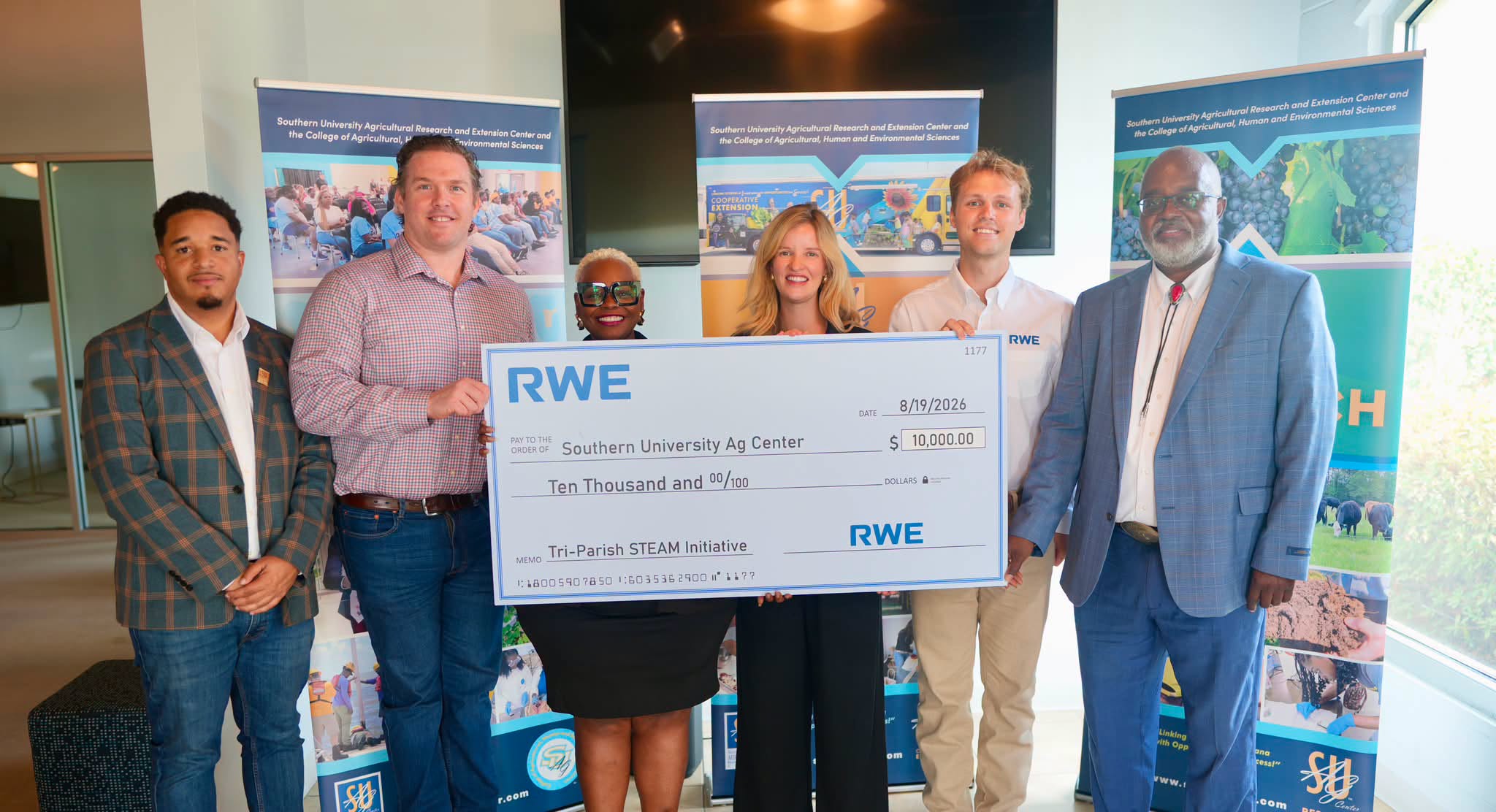
    RWE presented the Southern University Ag Center with the first $10,000 installment of $20,000 in support over two years for the Tri-Parish STEAM Initiative, extending the work into education and workforce development.

Project record

The substantive work behind the overview.

This is a working case record: grounded in submitted reports now, and designed to absorb emails, memoranda, meeting records, and final handoff files later.

01

Trust, stewardship, and institutional entry

SHED entered the Fellowship as a young, one-person economic-development organization. Before there was a clean-energy workstream, there was the slower work of learning St. Helena: attending Police Jury and SHED meetings, understanding local aspirations, and establishing a relationship strong enough for local leaders to invite deeper participation.

Local leadership

Mrs. Virginia Bell and SHED provided consistent stewardship, local knowledge, and access to the community’s economic-development conversation. The Police Jury supplied the public-government context and authority.

Fellowship contribution

Deeneaus showed up, introduced the ERC project, listened across meetings and community events, connected relevant resources, and built the trust that later made an invitation into the solar and CBA work possible.
02

Southland Steel and the ITEP point of comparison

The Southland Steel expansion was an early lesson in how a major project and a state incentive can arrive in a rural parish—and how quickly residents begin asking whether local people will share in the opportunity. That experience later sharpened the distinction between ITEP and a locally negotiated PILOT.

Local leadership

Parish, company, school, and community stakeholders brought the expansion, workforce questions, and local-benefit concerns into the room.

Fellowship contribution

Deeneaus attended the September 24 meeting, learned how ITEP was being used, later briefed SHED on the expansion context, and retained the experience as a practical point of comparison when the solar opportunity emerged.

03

Solar opportunity and Community Benefits Agreement

The solar work entered the Fellowship through a local invitation, not a preassigned task. CPEX’s facilitation created a channel for community priorities, while SHED and Parish leaders worked through what a locally generated Community Benefits Agreement could mean in practice.

Local leadership

Mrs. Bell, SHED, the Police Jury, and participating residents shaped the community priorities. CPEX facilitated the CBA process and technical engagement with the developer.

Fellowship contribution

Deeneaus researched solar development, ordinances, incentives, workforce possibilities, and community-benefit models; prepared briefings and memoranda; participated in meetings; and helped organize the information local leaders needed to evaluate options.

04

Pointe Coupee, the first PILOT pathway, and an IDB

A visit to Pointe Coupee turned a general search for local leverage into a concrete governance pathway. Its solar ordinances, Industrial Development Board, PILOT structure, and community-benefit approach offered a peer example St. Helena could adapt rather than inventing from scratch.

Local leadership

SHED pursued the peer-learning lead. The Police Jury and the locally authorized IDB hold responsibility for public decisions, negotiations, approvals, and accountability to residents.

Fellowship contribution

Deeneaus recognized the PILOT model from STEDC’s prior work, followed the lead with Mrs. Bell, researched and translated the mechanics, prepared materials, organized conversations, and connected Parish leaders with STEDC’s technical experience.

05

Capacity beyond a single development

The solar pathway sits inside a wider St. Helena portfolio: business-retention relationships, utilities, agriculture and land stewardship, youth and workforce pathways, resilience, broadband access, and a digital presence for SHED.

Local leadership

SHED, the Police Jury, schools, local businesses, Muse 3 Farms, and community organizations define which partnerships are useful and how they connect to Parish priorities.

Fellowship contribution

Deeneaus cultivated or extended relationships with The Partnership (formerly BRAC), DEMCO, CPEX, agricultural partners, education and internship networks, and others; he used those connections to explore a broader place-based capacity model rather than treating solar as an isolated transaction.

06

Tri-Parish Clean Energy and STEAM Initiative

The initiative translated the region’s clean-energy momentum into a proposed three-year pathway for students in St. Helena, Tangipahoa, and Washington Parishes. Its design connected hands-on STEAM learning to educator development, higher-education access, dual enrollment, industry credentials, and clean-energy careers.

RWE representatives and Southern University partners holding a ten-thousand-dollar check for the Tri-Parish STEAM Initiative
RWE presents the first $10,000 award to the Southern University Ag Center for the Tri-Parish STEAM Initiative, August 19, 2026.Open presentation
Local leadership

Southern University Ag Center leads the youth-development work, with the Washington Parish STEM Center, Northshore Technical Community College connections, participating schools and parishes, and RWE holding their respective education, implementation, and funding roles.

Fellowship contribution

The proposal identifies Deeneaus Polk and ERC as connecting workforce development with regional economic-growth opportunities. The Fellowship contribution was to help connect the clean-energy opportunity to a broader education and workforce pathway without claiming ownership of program delivery.

Ownership + continuity

Local authority remains the center; continued work requires a new charter.

St. Helena is both a community handoff and a potential continuing field case. The Fellowship record should make clear which institution owns each decision, what knowledge and relationships are being transferred, and where any future role for Deeneaus begins under a separate scope.

01

SHED retains community stewardship if it remains operational and affirmatively accepts the relevant assets and responsibilities.

02

The Police Jury and IDB retain public authority over agreements, incentives, appointments, negotiations, and local accountability.

03

CPEX, STEDC, The Partnership, the developer, utilities, and other partners retain their defined technical or relationship roles.

04

The SHED website, files, instructions, administrators, domain, and acceptance record move into an authorized community-controlled environment.

05

Project St. Helena, a PAE, or other post-Fellowship support must have a separate sponsor, owner, scope, and decision structure; it cannot silently extend the ERC role.

Evidence trail

What currently supports this page.

The page distinguishes report-documented activity from current or prospective work. Final public claims should be checked against the source file and, where appropriate, public records.

Initial + monthly project descriptions

The initial project description and June 2024 through April 2025 entries establish SHED’s capacity context and the sequence from relationship-building and Southland Steel to CBA, Pointe Coupee, PILOT, and IDB work.

Quarterly ERC reports

January–April and April–June reports document partnerships, research products, community engagement, website development, and the prospective nature of outcomes.

Offboarding + relationship maps

Define institutional ownership, warm handoffs, unresolved items, separate post-Fellowship scopes, and the St. Helena continuity scenarios.

Tri-Parish proposal + award photograph

The December 2025 presentation establishes the original $20,000 Year 1 request. Deeneaus Polk confirms $10,000 annually over two years; the August 19, 2026 photograph verifies the first installment to the Southern University Ag Center.

Current Parish records

IDB resolutions, appointments, minutes, agreements, CBA and PILOT drafts, emails, and memoranda should verify any final legal or financial claim.

Evidence rule: proposed investment, benefits, revenue, jobs, and future partnerships remain labeled as proposed or in progress until the record verifies completion.