Analy Vega
Incoming Freshman, Harvard UniversityContributed ArcGIS mapping that documented businesses and industry across St. Helena Parish, then used Community Competitiveness Indicator data to make the map relevant to SHED Board needs.

Capacity Building Through Suburban-Rural Regional Coordination
The Economic Recovery Corps is a national fellowship supported by the International Economic Development Council and the U.S. Economic Development Administration. Deeneaus Polk was placed with St. Tammany Economic Development Corporation to serve and work alongside leaders in St. Helena and Washington Parishes.
“Instinct caused me to reiterate the need to move at the speed of trust and this month definitely helped me understand why.”
“Now, I am focused on proceeding as the way opens, leaning into these [newly] formed relationships and leveraging them to create traction ... and overall impact for the communities I serve as well.”
Before these outcomes were visible, the roadmap already connected local economic development institutions with community planning and leadership, HBCU technical assistance, and the buildout of infrastructure and the digital ecosystem.
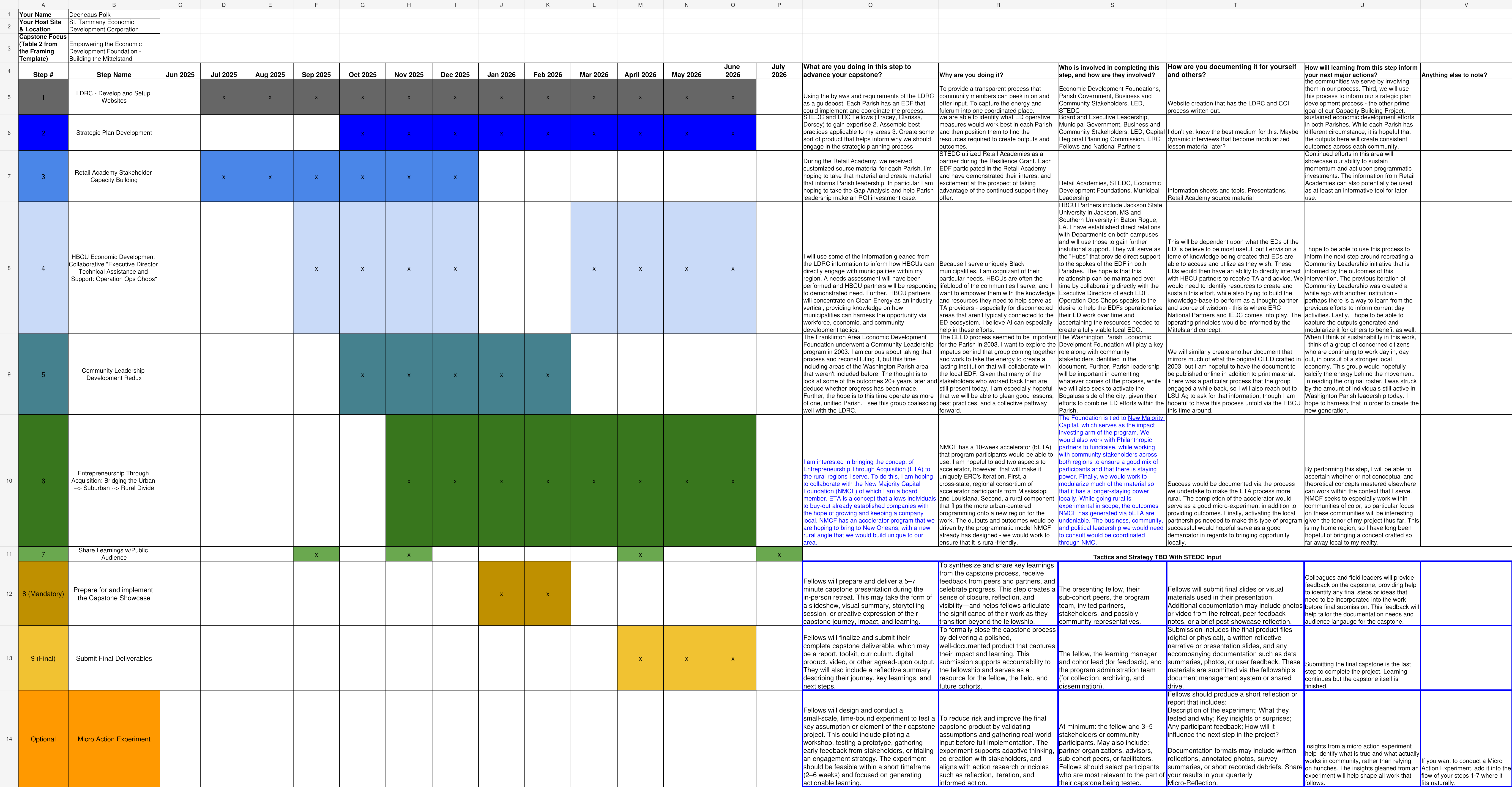 Original roadmap · completed July 12, 2025
Reading the roadmap correctly: the workbook’s colors and x marks show planned timing, not completion. A formal CLED Redux and rural ETA remain visible as directions, but were not carried forward as projects to be completed.
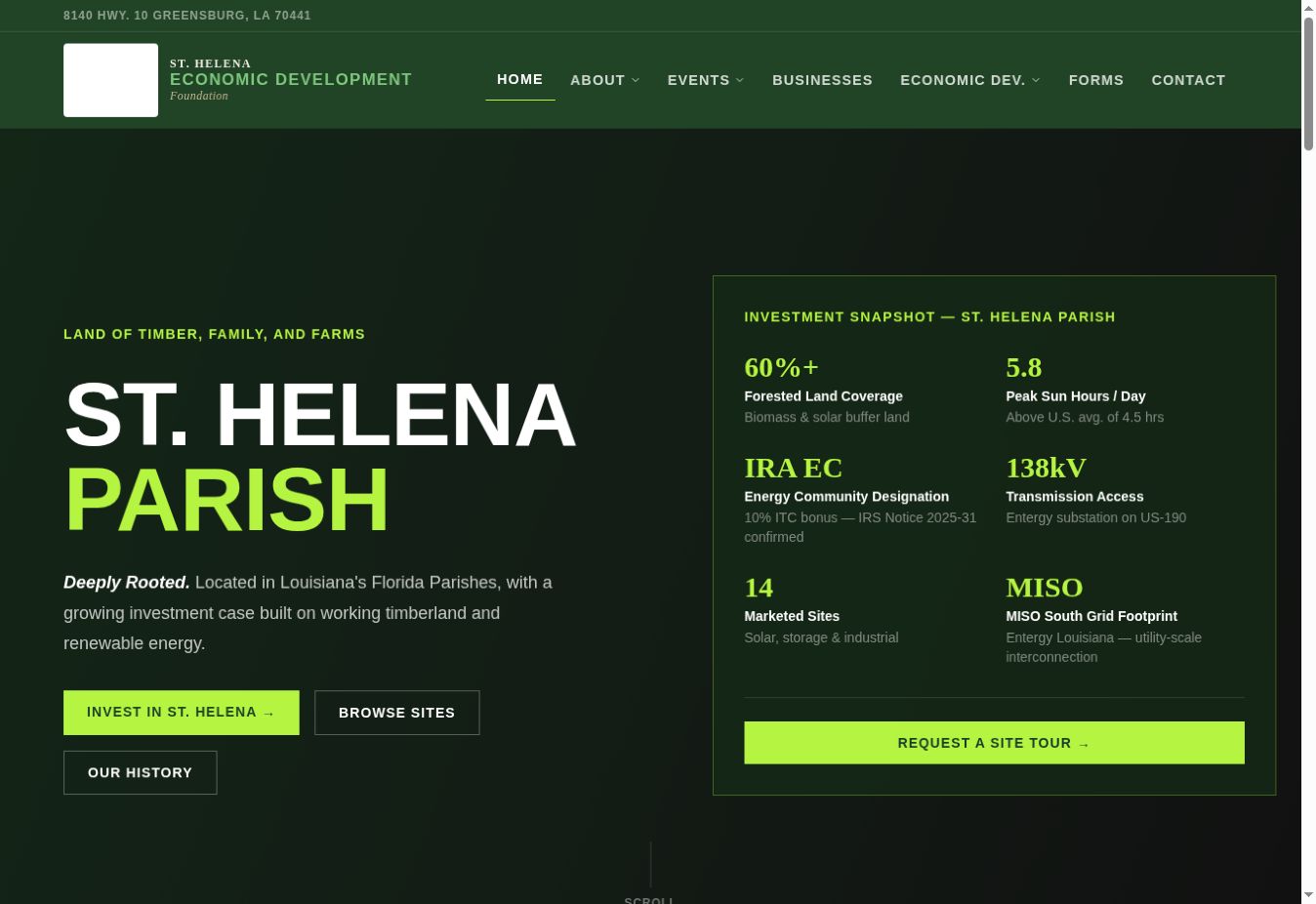
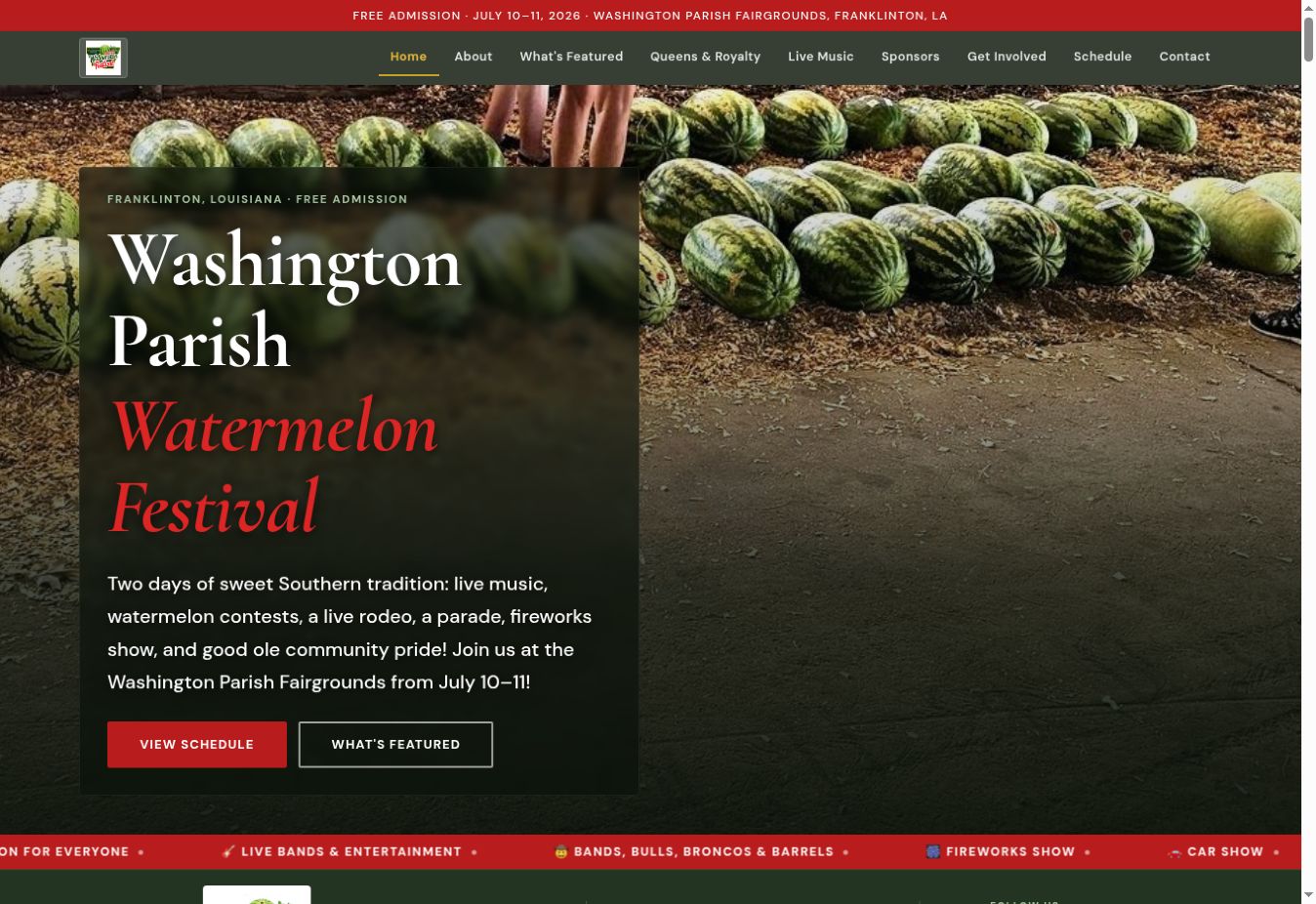
Two distinct community institutions now have public platforms built around their own audiences, priorities, and identities.

Contributed ArcGIS mapping that documented businesses and industry across St. Helena Parish, then used Community Competitiveness Indicator data to make the map relevant to SHED Board needs.
Designed the early concepts for both the SHED and Washington Parish Watermelon Festival websites, working with local communities to shape what they wanted each site to communicate and how it should look.
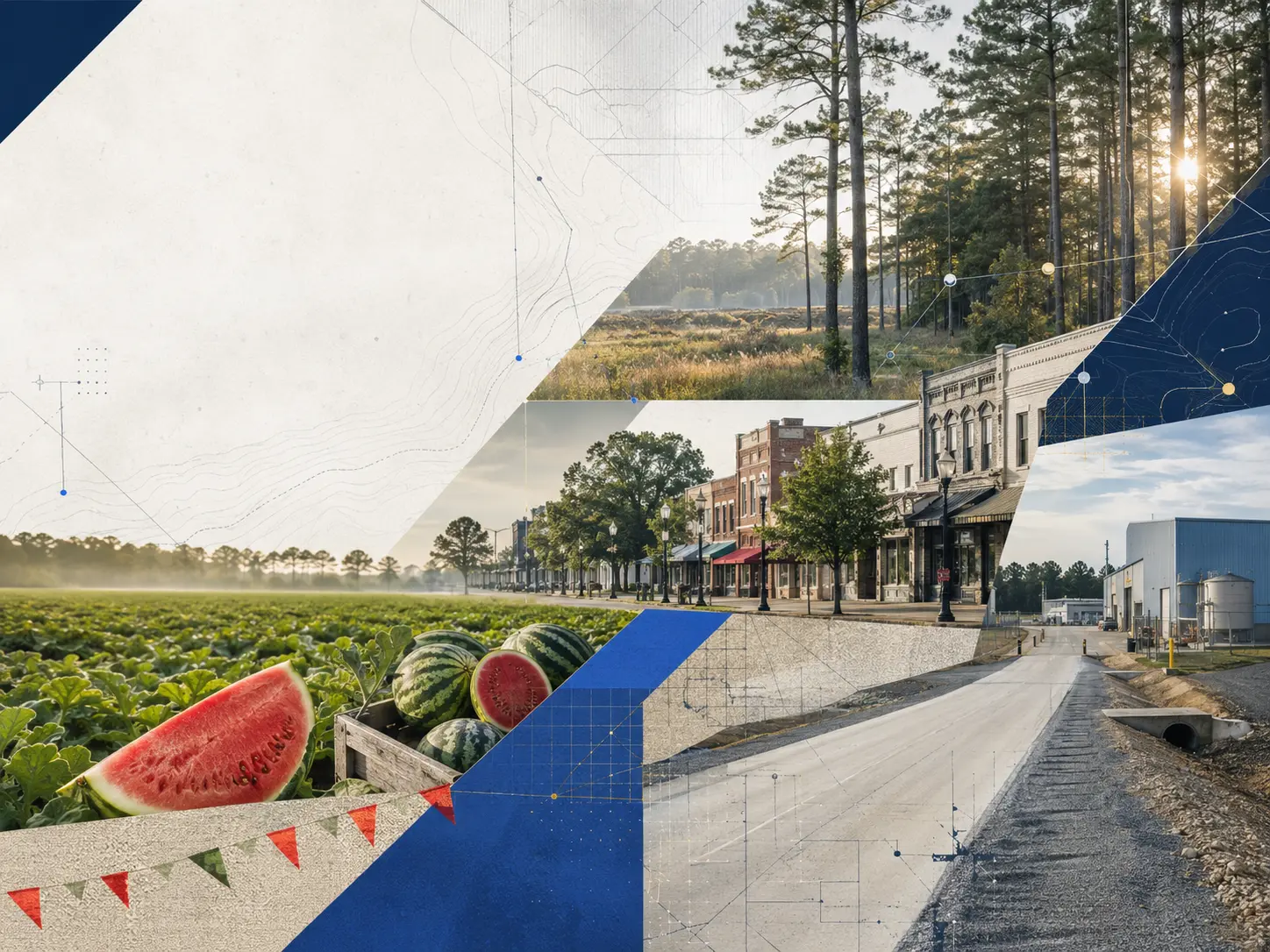
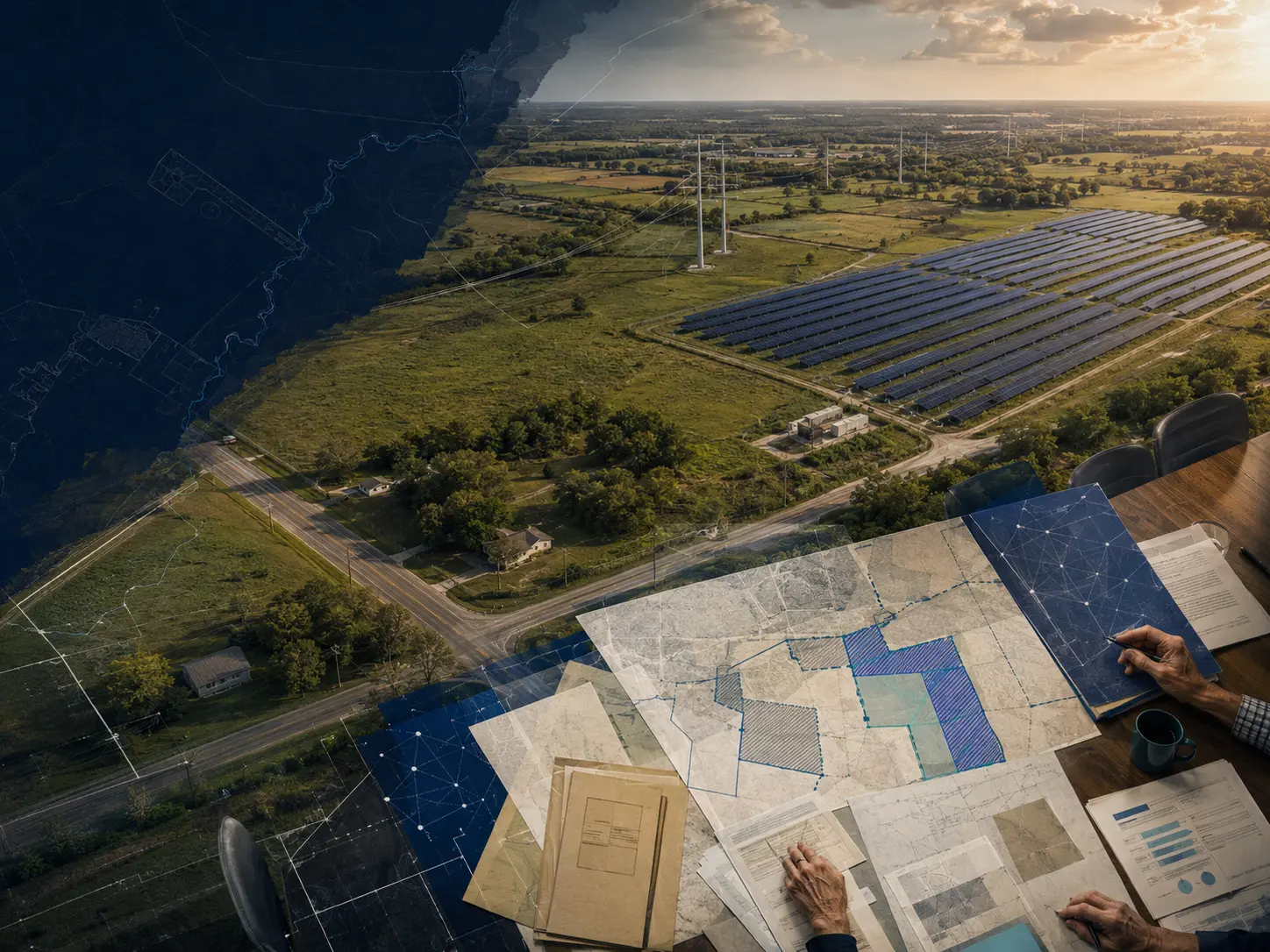
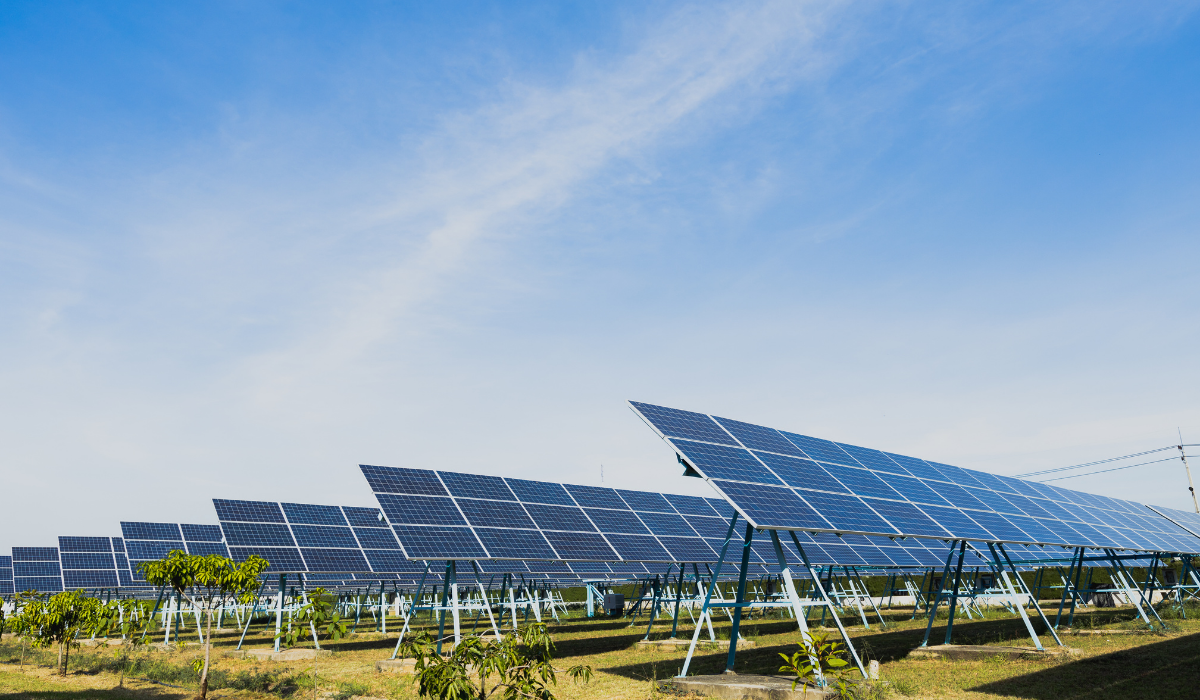
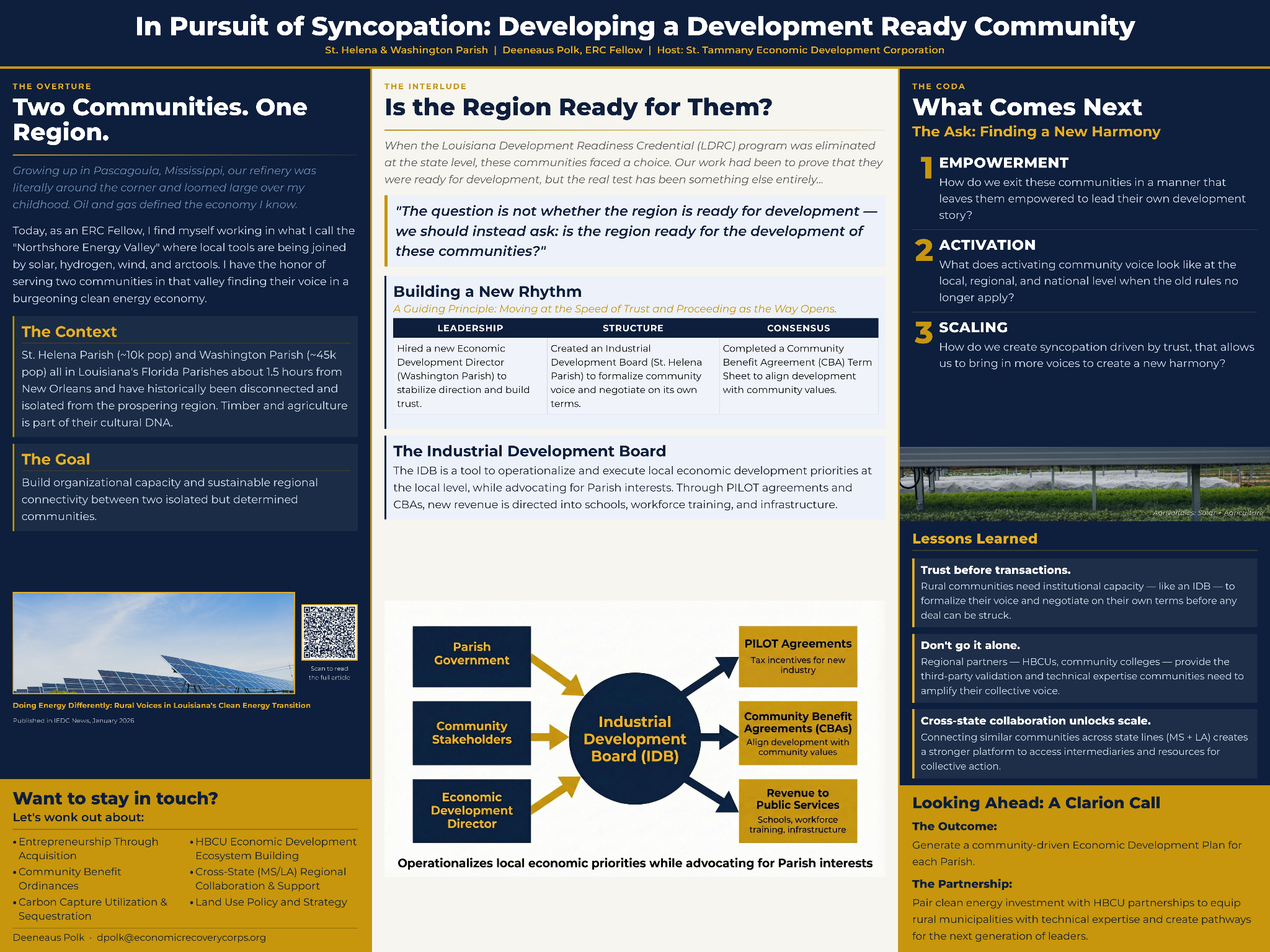
How rural Louisiana communities can shape clean energy investment through trust, local negotiating capacity, and regional partnerships, with residents’ priorities guiding what comes next.
Read the article on IEDCInternships, planning resources, and youth programs grew from connections between local priorities and partners able to support them.
In December 2025, a proposal connected Southern University, K-12 education partners, and 3 participating parishes together to put in a STEAM proposal. RWE agreed to support the clean energy and STEAM pathway initiative and the first award followed in August 2026, with additional support to come in the future.
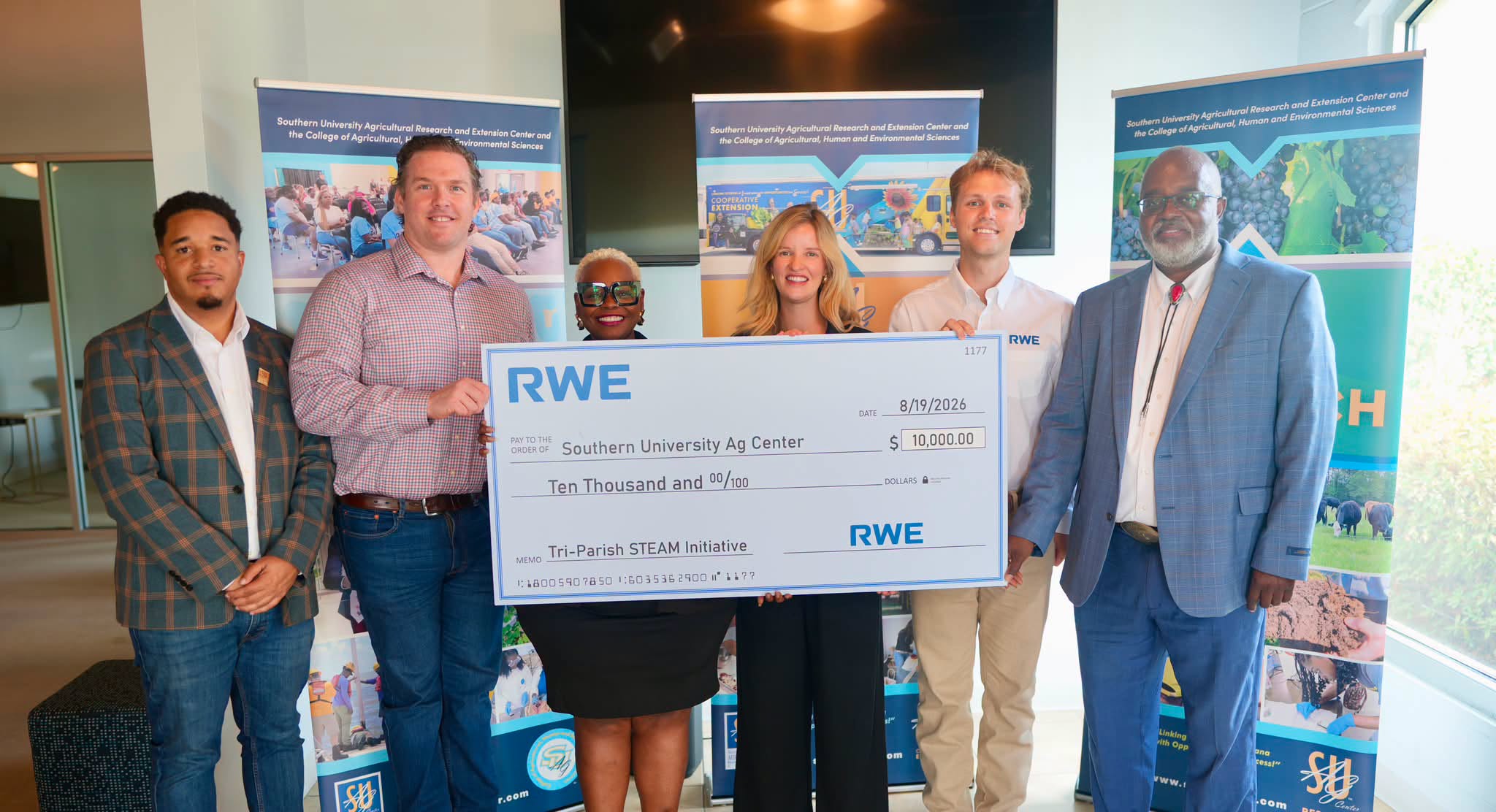
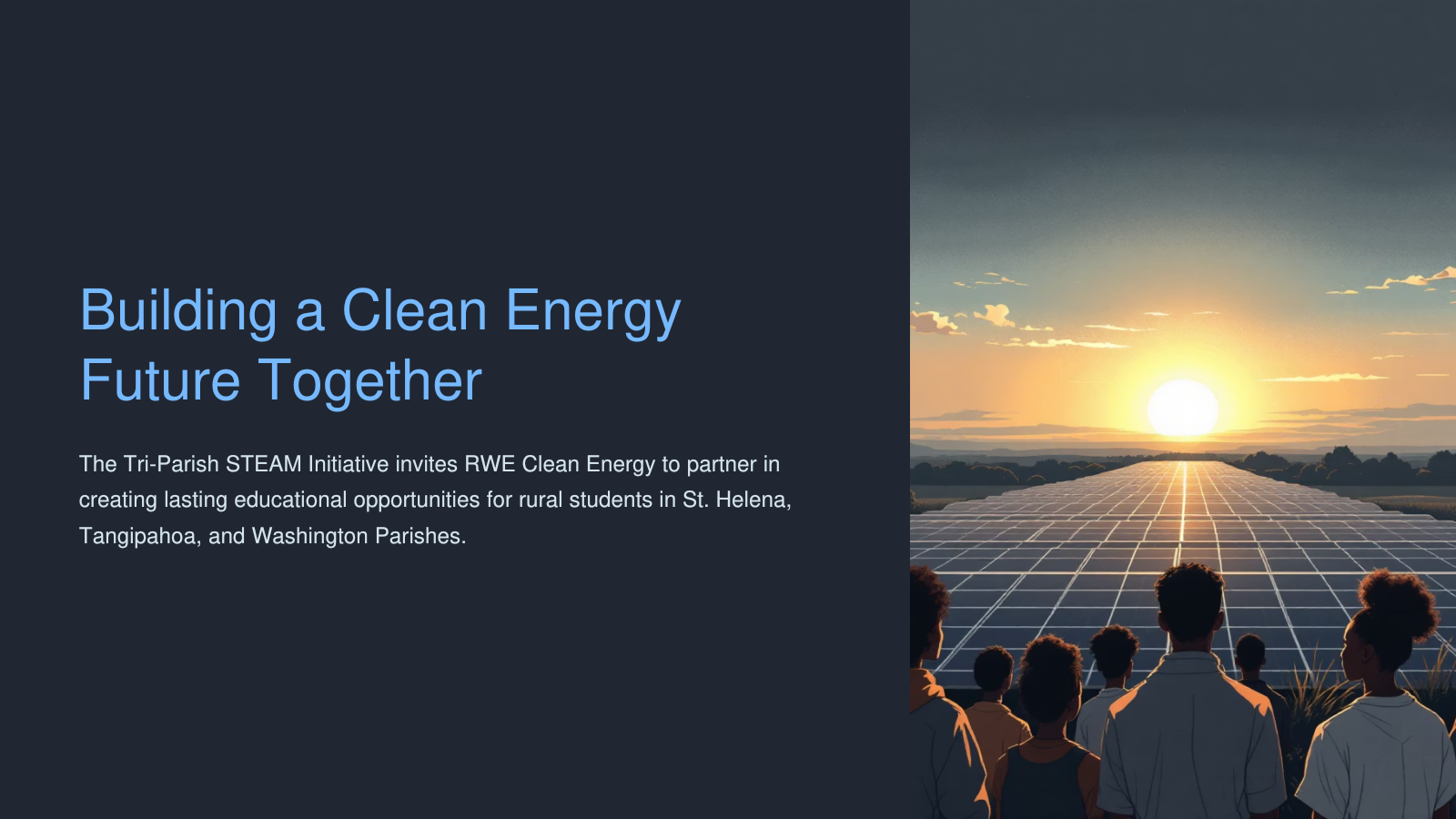
The deck requested $20,000 in Year 1 anchor funding and outlined a three year path from dual enrollment and industry credentials to educator development. Funding is now structured as $10,000 per year for two years, totaling $20,000 overall.
Role and ownership: The proposal identifies Deeneaus Polk and ERC as connecting workforce development with regional economic growth opportunities. Southern University and the participating education and community institutions lead program delivery.
Read the St. Helena project recordParish partners working through co-designed internship scopes
Secured access to internship support and coordinated scopes around locally identified web and data needs.
Muse 3 Farms
Supported coordination of the opportunity.
St. Helena Parish partners
Connected local planning priorities to regional resources and supported coordination around the opportunity.
Southern University Ag Center · Tri-Parish STEAM Initiative
Connected workforce development to the regional economic growth opportunity in the partnership proposal. Support is structured across two years, totaling $20,000.
St. Helena Parish Summer Camp
Volunteered with the Parish’s summer camp, which also received support from RWE.
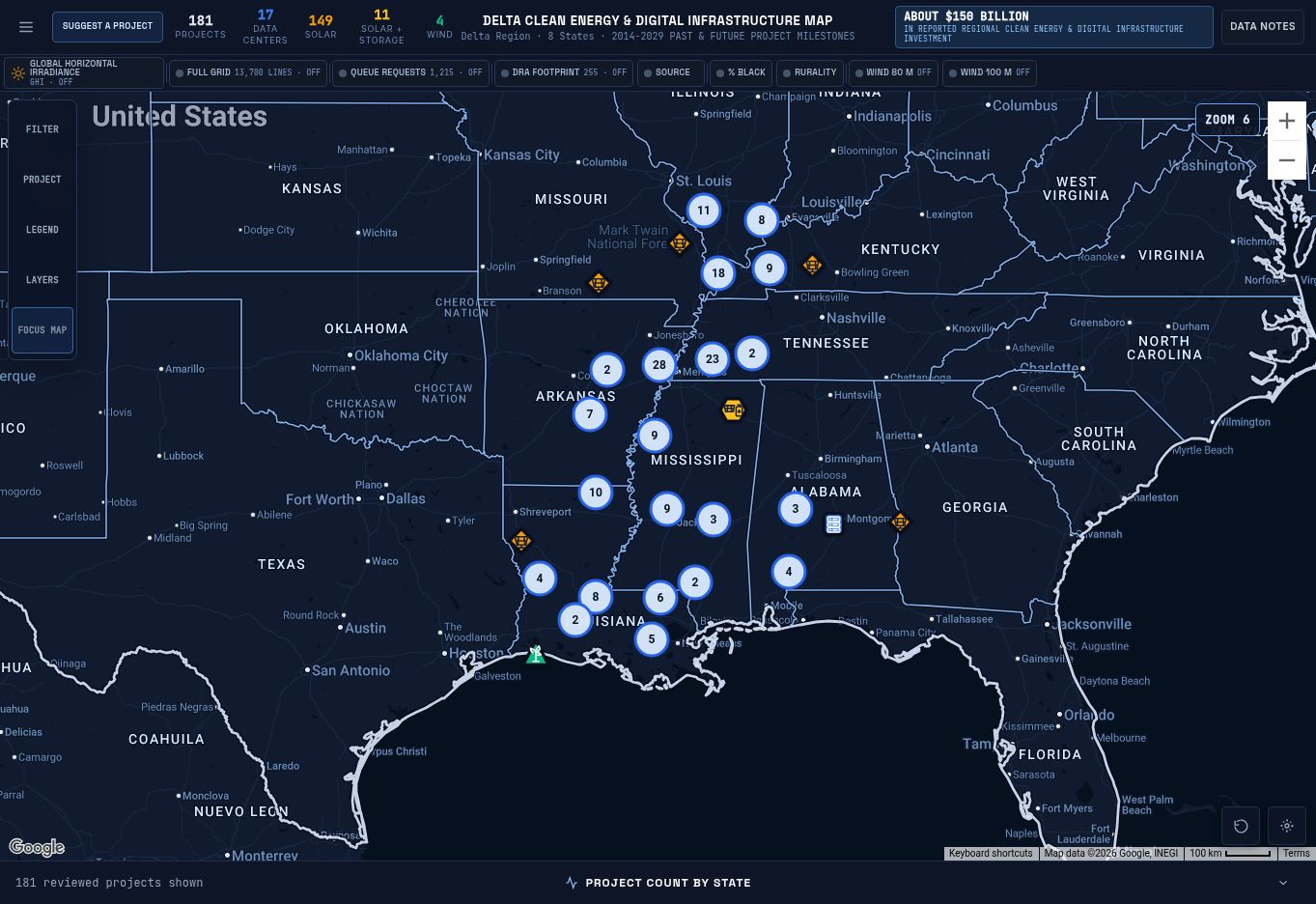
The Delta Clean Energy & Digital Infrastructure Map connects the parish work to the larger geography of investment, power, land, rurality, and community-benefit questions across the region.
Open the map in a new windowReported investment in clean energy and hyperscale data centers in the DRA footprint.
Digital infrastructure investments and the electric transmission, gas pipelines, and interconnection queue that go with them.
DRA footprint, Black population, rurality, and global horizontal irradiance, which often serves as a proxy for project location.
Community benefit research that is contextualized and driven by local community involvement.
The map is 3LEVATE research infrastructure influenced by Deeneaus Polk’s time as an ERC Fellow. It supports comparison and planning for communities within the DRA 8-state, 255 Parish/County footprint, but should not be confused with the two community website transfers.
The Journey closes Year 1. The Reset sets the direction for Year 2 and the rest of the Fellowship.
The Journey marked the end of Year 1, taking stock of the relationships, local priorities, and lessons that changed the direction of the work in each Parish.
“When I was selected as an ERC Fellow, I was most excited at the prospect of pursuing a big dream: bringing Communities of Color together across our state lines to better collaborate, share information, and support one another as we navigate the major shifts coming to our communities.”
Repeated meetings and Parish visits established relationships that shaped the work and led to deeper working relationships with Parish government. This allowed me to deepen the solar work, host a business summit with Mrs. Virginia, and take in my first industrial business expansion.
Working with the Economic Development Foundation to build out the candidate profile and search for their Executive Director, the economic summit put on by Representative John Wyble, and peer learning from Maine helped drive the work.
Local trust led to an invitation to learn from the peer Parish of Pointe Coupee, with discussions leading to analysis of a potential PILOT in St. Helena. This meeting truly opened the solar and community benefit conversations in the Parish, with Mrs. Virginia leading the way.
At the halfway mark, The Reset organized the plan for Year 2 and the remainder of the Fellowship, connecting first-year learning to the work still ahead.
“My overall fellowship is emerging as a story about challenging the traditional notions of Economic Development in the Deep South. For far too long, communities in this region have depended on external entities to drive their growth and prosperity.”
St. Helena’s community-benefit work, IDB, and PILOT pathway put local priorities into the investment conversation.
Institutions with tools of their ownThe websites give local institutions a public home. ArcGIS mapping will make business and industry data more useful to the SHED Board.
Regional partners working on local prioritiesThe Southern University partnership with Tri-Parish STEAM provides continued practical implementation for the broader priorities of the community vision.
 ERC Year 1 Update
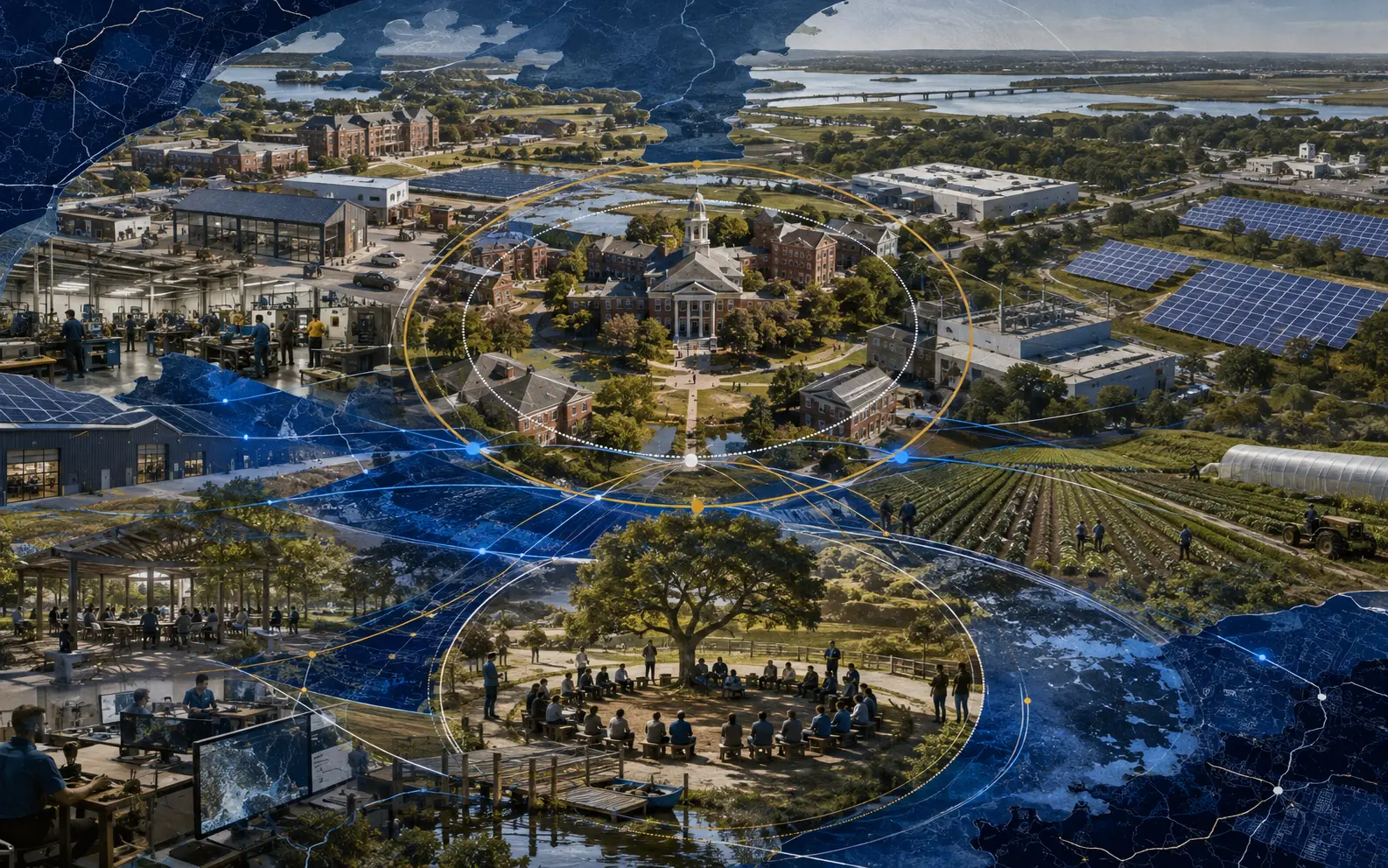
Leaning into the German model to grow place-based firms alongside the governance frameworks needed to promote better workforce, capital, and research outcomes that build enduring economic systems, transfer wealth, and promote collective benefit.
Turn community driven policy development challenges into student and faculty projects that are compensated and produce usable decisions and implementation capacity.
Test how a rural community can navigate governing the potential of major clean-energy investment in their community, growing their economy while retaining local authority.